

Precision Alumina & Zirconia Solutions for Next-Generation Sensing
Stability is Everything in Sensor Performance
Unstable readings, signal drift, and premature failure often originate from material limitations. At Shunda Ceramic (SD), we engineer high-purity Alumina (Al2O3) and Zirconia (ZrO2) components to ensure long-term stability, signal integrity, and environmental resistance in demanding sensing applications.
Our ceramics enable zero-drift performance, even under extreme pressure, temperature cycling, and corrosive media.
Key Ceramic Components for Sensor OEMs
We manufacture the critical ceramic elements that form the backbone of modern sensing technology:
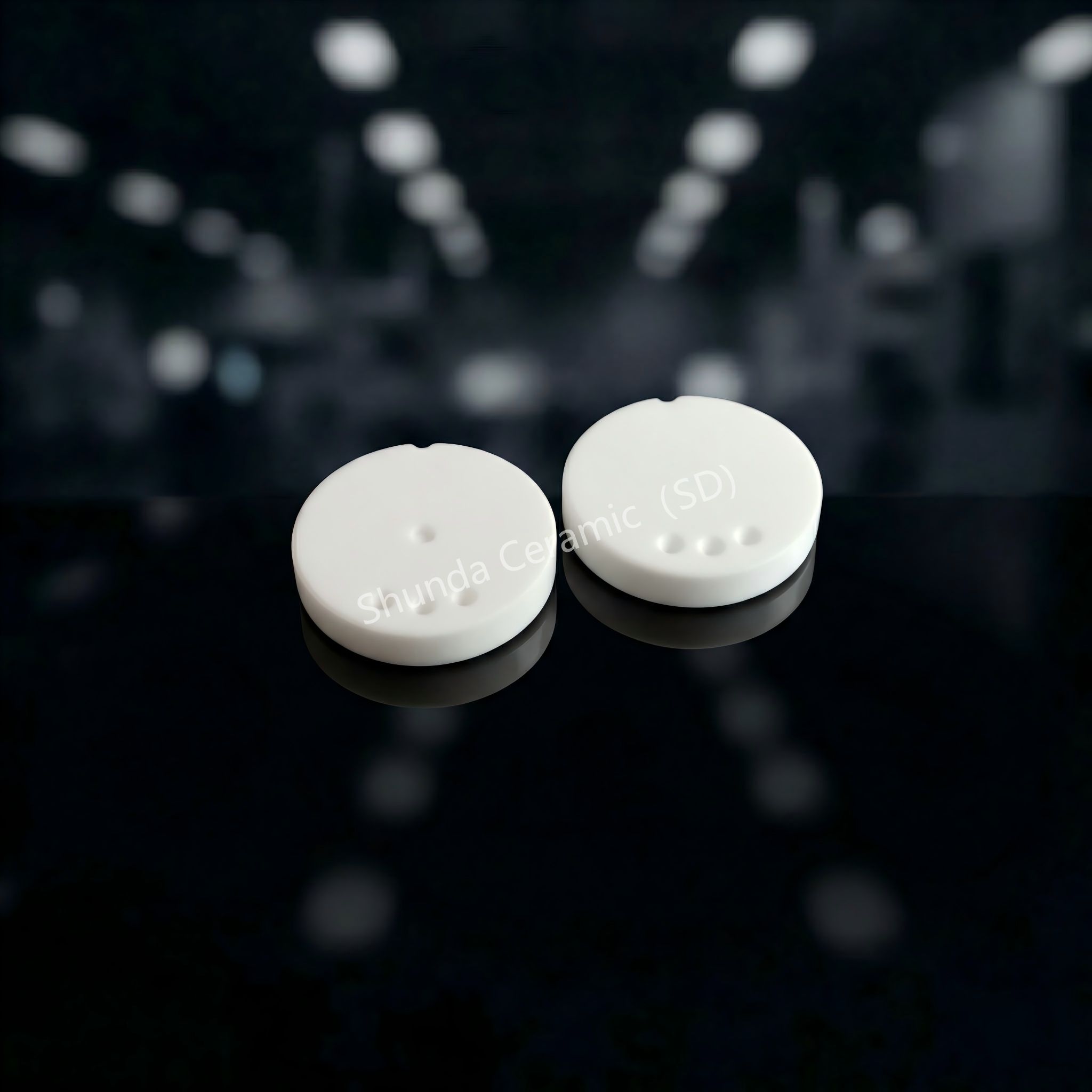
·Ceramic Pressure Diaphragms: High-purity Alumina (96%–99.8%) for capacitive and piezoresistive pressure sensors.
·Sensor Bases & Housings: Precision insulating bodies for Oxygen (O2), NOx, and MAP sensors.
·Ceramic Substrates for Thick Film Circuits: Optimized surface quality for high-resolution circuit printing.
·Insulating Spacers & Sleeves: Miniature Zirconia components designed for high-vibration environments.
Material Selection Guide for Sensor Applications
Choosing the right ceramic material is critical to sensor performance:
·Alumina (Al2O3): Ideal for pressure diaphragms and insulating substrates requiring high stiffness, dielectric strength, and cost-efficiency.
·Zirconia (ZrO2): Best suited for miniature, impact-resistant, and high-vibration sensor components.
👉 Engineering Insight: Selecting the correct material ensures sensor accuracy, durability, and long-term reliability.
Technical Advantages for Precision Sensing
Typical Sensor Applications
Our ceramic components are widely trusted in:
Oxygen (O2) & NOx Gas Sensors
MAP & Fuel Pressure Sensors
MEMS Pressure Sensors
Industrial Pressure Transmitters
HVAC Smart Control Systems
Medical Fluid Analysis Sensors
Why Ceramic Over Metal or Plastic?
Compared to metal or polymer housings, ceramic components provide:
·Superior thermal stability under high temperatures (1000℃ to 1700℃+).
·Excellent chemical resistance in aggressive media (Hydrofluoric/Nitric acids).
·Long-term signal reliability without dimensional drift.
·Higher electrical insulation performance at elevated voltages.
Advanced Manufacturing for Sensor Reliability
Sensor components demand more than shape-they require functional precision and repeatability. Our in-house capabilities ensure consistent OEM quality:
·CIM (Ceramic Injection Molding): High-volume production of complex geometries with excellent consistency.
·Micron-Level Precision Machining: Diamond grinding achieves tolerances up to ± 0.005 mm.
·Surface Finish Engineering: Controlled Ra values for optimal adhesion of gold or silver sensor pastes.
·100% Hermeticity Testing: Critical for vacuum and high-pressure sensor environments.
Technical FAQ for Sensor Engineers
Q: Which material is best for high-pressure diaphragms?
A: High-purity Alumina (96%+) is preferred due to its high elastic modulus and long-term mechanical stability.
Q: Can you achieve surface flatness for thick-film printing?
A: Yes. We achieve surface planarity of < 1 μm through precision lapping and polishing.
Q: Do you support miniature sensor components?
A: Yes. Our CIM and CNC machining processes are specifically optimized for small, high-precision geometries.
Q: Do you provide samples for validation?
A: Yes. We support prototype samples for testing and qualification before mass production.
Partner with a Sensor Ceramic Expert
Whether you are developing a MEMS pressure sensor or a high-temperature gas sensor, our engineering team in Xinhua provides full DFM (Design for Manufacturability) support to help you scale from prototype to mass production.
🚀 Take the Next Step
[ Upload Your Drawing for Quotation ]