

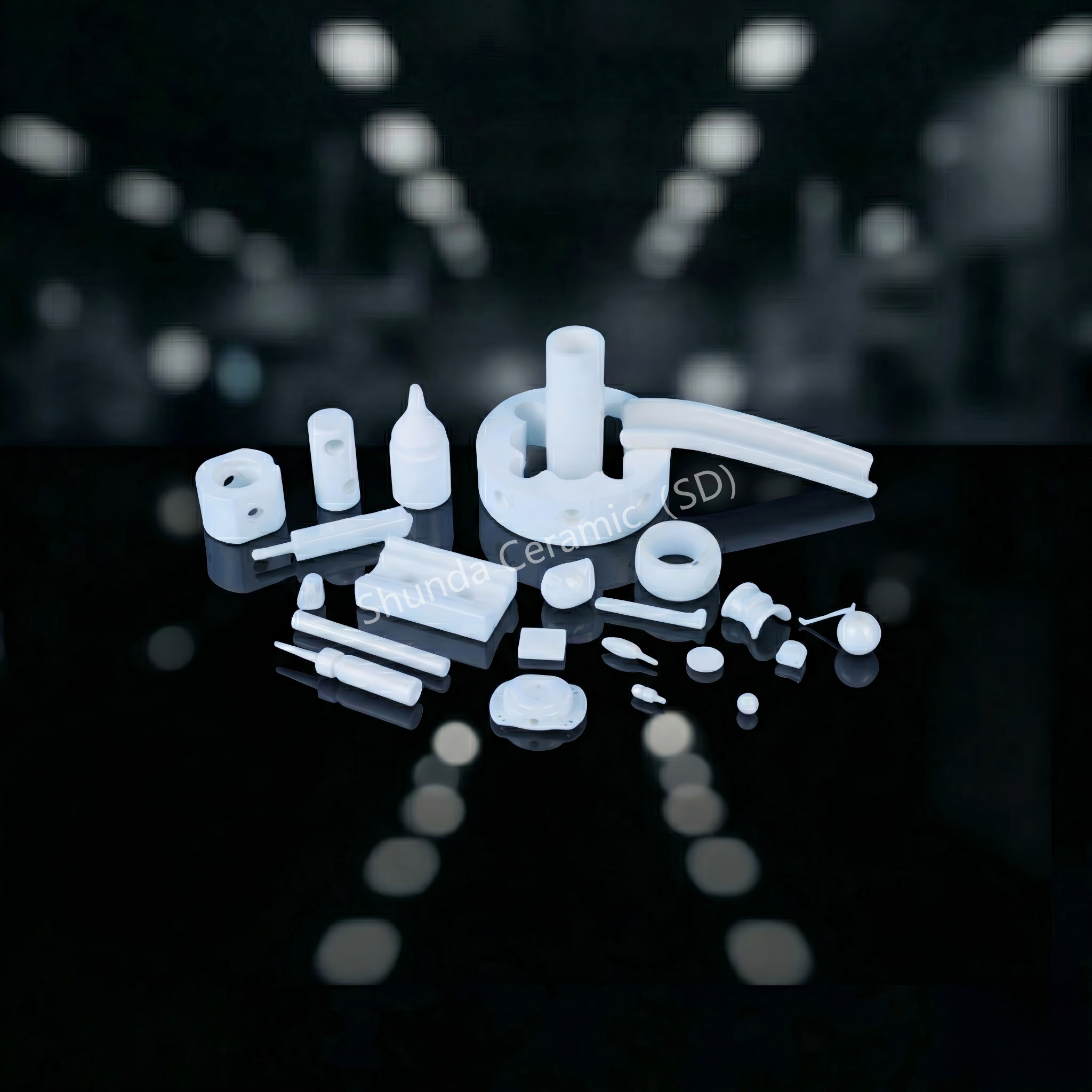
Complex Geometry, Micron-Level Precision & Scalable Mass Production
Overcome the Limits of Traditional Ceramic Manufacturing
Traditional ceramic forming methods often struggle with complex geometries, tight tolerances, and high machining costs. Our CIM (Ceramic Injection Molding) technology enables the production of high-precision zirconia structural parts with intricate designs, excellent consistency, and minimal post-processing.
·✔ Ideal for OEMs: Optimized for high-volume, high-complexity ceramic components.
·✔ Engineered for Excellence: Overcome the design limitations of dry pressing and extrusion.
What is CIM (Ceramic Injection Molding)?
CIM combines the design flexibility of plastic injection molding with the superior material properties of advanced ceramics. Using Yttria-Stabilized Zirconia (Y-TZP), we manufacture miniature, high-performance components that offer:
·Extreme wear resistance
·High mechanical strength
·Micron-level tolerances
·Near-net-shape efficiency
Why Choose CIM for Zirconia Structural Parts?
·Design Freedom: Successfully produce complex geometries including internal threads, cross-holes, and curved surfaces.
·High Precision & Consistency: Achieve repeatable tolerances across millions of units with stable density.
·Cost Efficiency at Scale: Significant reduction in material waste and minimized post-machining requirements.
·Superior Surface Finish: Capability to achieve Ra < 0.4 μm directly from the molding process.
CIM vs. Traditional Ceramic Manufacturing
Technical Capabilities
Typical Applications
Our CIM technology is the preferred choice for high-precision sectors:
·Automotive: Fuel injection components and sensor housings.
·Fluid Control: Micro-valves and wear-resistant precision nozzles.
·Telecommunications: Fiber optic ferrules and high-precision sleeves.
·Medical & Dental: Biocompatible miniature zirconia structural parts.
Precision Manufacturing & Process Control
The key to CIM success lies in meticulous shrinkage and density control throughout the manufacturing cycle:
1.Customized Feedstock Development: Optimized binder and powder formulation for uniform flow.
2.Precision Tooling: High-accuracy mold cavities designed to compensate for sintering shrinkage.
3.Controlled Debinding & Sintering: Advanced thermal profiles to prevent cracking, warping, and internal stress.
Technical FAQ
Q: What tolerance can CIM achieve?
A: We achieve ± 0.3%-0.5% in the as-sintered state. For mission-critical dimensions, post-machining can reach ± 0.002 mm.
Q: Is CIM suitable for high-volume production?
A: Yes. CIM is specifically designed for large-scale manufacturing where consistency and unit-cost reduction are paramount.
Q: Can CIM replace CNC machining?
A: For complex geometries, CIM significantly reduces or eliminates the need for expensive CNC machining, lowering the overall cost per part.
Ready to Optimize Your Design for CIM?
Transitioning from metal or plastic to ceramic? Our engineering team in Xinhua provides full DFM (Design for Manufacturability) support to optimize your project for cost and performance.
[ ✉️ Get CIM Design Optimization Support ]